How Does a Quartz Watch Work? Inside a Seiko Quartz Movement
Joshua GrilletThe history of the quartz watch
Yes, ladies and gentlemen, quartz movements can be serviced! Of course, there are quartz watches and quartz watches!
The quartz watch appeared in Tokyo on December 25, 1960. This marked the birth of Seiko's Astron. 100 models with a gold case were produced, priced at ¥450,000, which was the cost of a brand new Toyota Corolla at the time.
Since that day and the upheaval it caused in the watch industry, quartz technology has continued to improve and become increasingly accessible. In my opinion, the golden age that combined overall reliability and affordable prices was the late 1970s and early 1980s at Seiko. Quality watches for everyone!
How does a quartz watch work?
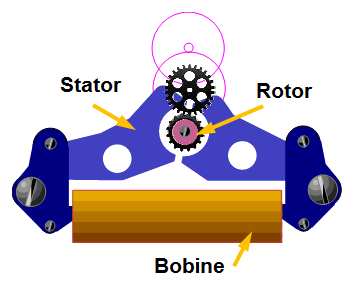
If you want to understand everything about this technology, no one explains it better than Romain from the blog Elégance & Précision here. "Fonctionnement d’une montre à quartz"
Welcome to the LumeVille virtual workshop!
Grab a chair and a magnifying glass, because today we're going to be working on a Seiko SilverWave Quartz, a model that I really like!
Today's subject is a 7546-6050 reserved for the Japanese market, which can be found in the 1978 catalog at the top left.

First observations of the vintage Seiko
The watch on the workbench is in need of some TLC! It has seen better days and the movement isn't working. The second hand is hesitant but doesn't move, which is a key clue to the problem: the gear train is blocked by old oil or debris.

Today's schedule:
- Replacing the glass
- Repairing the bezel
- Servicing the movement
Let's get started!
Replacing the glass
We remove all the exterior parts and clean them using ultrasound. There's a lot to do!

The glass is wedged between the bezel and a ring, an atypical construction in the watchmaking world but classic for Seiko at that time. The new glass is in place, we press down.

The dial ring or “chapter ring” is installed in the case middle, and then the whole assembly can be installed.

Painting the bezel
The paint on the inscriptions has worn off. Let's get our paintbrushes out!


Satisfying, isn't it?
Revision of the movement
Grab your screwdriver and tweezers, we're taking it apart.
If you followed the theoretical part of the link above carefully, you'll have no trouble finding the stator and rotor.


All mechanical parts are washed, then everything is reassembled and lubricated appropriately. A new battery is installed, and then...

Miracle! The movement is coming out of its deep coma.


Final result


Conclusion
Quartz is a superb technology that is often overlooked, yet it offers many advantages:
- The finesse of the movement and the watch in general
- Shock resistance
- Precision
- Less expensive and less frequent maintenance
Of course, the Seiko 7546 movement is not particularly beautiful, as that is not its purpose, but some manufacturers have risen to the challenge:
This article is part of an ongoing exploration of vintage watches.
I offer independent analysis and private inspections for collectors.
Have a great time on the website!
Joshua Grillet