Seiko Diver Submerged: The Two Fatal Errors (NH35 & 4R35 Water Damage)
Joshua GrilletThe Seiko Samurai diving watch
Learning from your mistakes is good, but learning from the mistakes of others is much better.
Today we are looking at one of Seiko's best-selling diving watches, the Samurai, here in the limited edition Blue Lagoon version released in 2017.

Inspection of the diving watch
I was entrusted with this watch, which had taken on water after a swim.
Here is the Samurai as I received it at the workshop:


The dial is slightly pitted and there are still small drops of water on it. The hour markers are oxidized and the Lumibrite is blistered in places, mainly at 12 o'clock and 6 o'clock.
The date disc has taken on a nice rusty hue.
I continue the inspection.

There's something like mud inside the bottom of the box.
Hang on for the rest.

The 4R35 movement is a pile of rust.
How can water and rust get into a watch that is water-resistant to 200 meters?
- Water: It got in while swimming in the sea when the screw-down crown was not properly locked.
- Rust: The incident occurred in August and the watch arrived at the workshop at the end of December. The movement did not appreciate living with seawater for five months.
I continue disassembling and remove the hands.

The problems continue. The second hand barrel has become detached from its body.
I remove the dial.


No surprise there.
The Seiko NH35 movement
The goal here is to get the watch working again at minimal cost, as requested by the customer. To do that, I need to replace the movement.
Seiko sells its 4R35 movement to many micro-brands. The movement is anonymous and goes by the name NH35.


The movement is there, I can move on to reassembly.
First, I need to repair the needle. Using a Seitz bracket, I will re-chase the barrel.
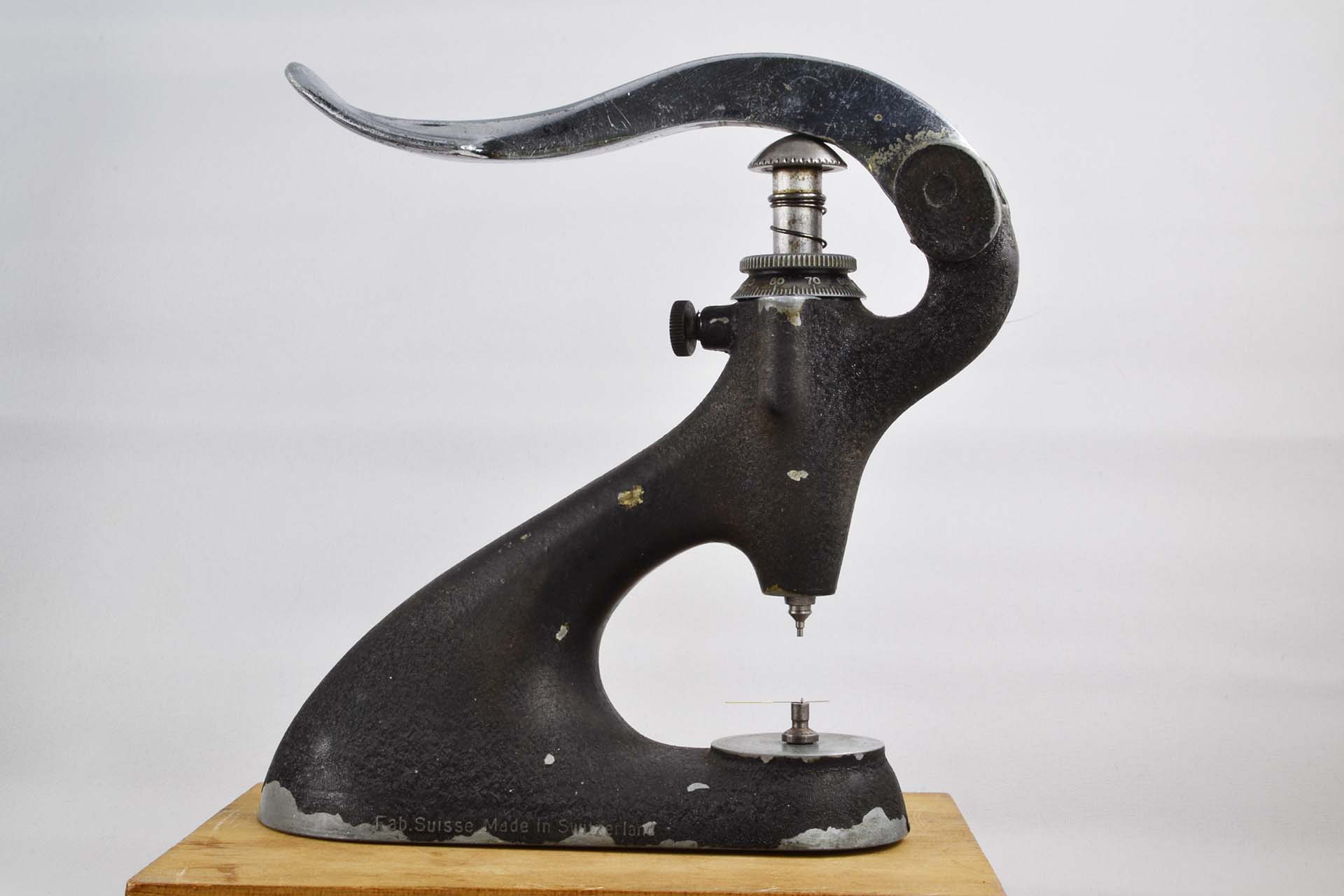


The dial is cleaned as thoroughly as possible, I install it on the movement and place the hands.

Before proceeding to the casing, I test the watertightness of the case.

It's a failure; water is entering the box through the crown. After inspecting it, one of the two gaskets is defective and needs to be replaced with a new one.
After replacing the gasket, the test is finally successful.

The case is watertight and clean, so I can put everything back together.


This Seiko Samurai now works perfectly thanks to its new movement, but some scars remain.
They are even more noticeable in this photo taken in the dark.

To conclude, here are a few tips:
- Remember to screw the screw-down crown all the way down. Otherwise, it will allow dust and water in liquid and gaseous form to enter.
- If you use your watch for water activities, have its water resistance checked annually by a watchmaker.
- If, despite this, your watch takes on water, take it to a watchmaker as soon as possible. Otherwise, its condition will become increasingly critical.
This article is part of an ongoing exploration of vintage watches.
I offer independent analysis and private inspections for collectors.
Have a great time on the website!
Joshua Grillet